
 Cart is empty
 How to Unclog a Drain: 7 Easy Methods That Actually Work
How to Unclog a Drain: 7 Easy Methods That Actually Work
A slow or completely blocked drain is one of those household problems that always seems to happen at the worst possible time.
The good news is that many common drain clogs can be cleared at home without immediately calling a plumber.
Whether you’re dealing with a clogged kitchen sink, bathroom sink, shower or bathtub, this guide walks through seven practical methods you can try — starting with the simplest.
Before You Start
First, try to work out what is causing the blockage.
Bathroom drains are commonly blocked by:
- Hair
- Soap residue
- Toothpaste
- Dirt and skin products
Kitchen sinks are more likely to collect:
- Grease and oil
- Food particles
- Coffee grounds
- Detergent residue
Knowing what’s probably inside the drain can help you choose the right method.
Also, avoid randomly combining different chemical drain cleaners or household chemicals. Mixing incompatible chemicals can create dangerous reactions.
1. Remove the Visible Blockage
Start with the simplest solution.
Remove the drain cover or stopper and use a flashlight to look inside.
You may find a clump of hair or debris sitting close to the opening.
Put on gloves and remove anything you can safely reach.
For bathroom drains, a simple plastic drain-cleaning tool can be useful for pulling hair from just below the opening.
Once you’ve removed the debris, run water for a minute and check whether the drain is flowing normally.
2. Try Hot Water
For some minor kitchen sink blockages, hot water can help loosen accumulated grease and soap residue.
Heat some water and carefully pour it into the drain in stages rather than all at once.
Wait between pours and check whether drainage improves.
However, be careful with extremely hot or boiling water if you have PVC plumbing or aren’t sure what type of pipes you have. Very high temperatures may damage some plumbing systems.
3. Use a Plunger
A plunger isn’t just for toilets.
A small sink plunger can be surprisingly effective for blocked sinks and bathtubs.
Add enough water to cover the bottom of the plunger.
Position it directly over the drain so that you create a good seal.
Then plunge firmly several times.
The pressure and suction can move the blockage enough for water to begin flowing again.
If your sink has an overflow opening, covering it temporarily with a wet cloth may help create stronger pressure.
4. Try Baking Soda
For a mild blockage or unpleasant drain smell, baking soda can sometimes help loosen residue.
Remove as much standing water as possible.
Pour baking soda into the drain and allow it to sit for a while.
Follow with hot water.
You may also see recommendations for combining baking soda and vinegar. The reaction creates plenty of bubbling, but don’t assume that the bubbles automatically mean a serious blockage is being dissolved.
For stubborn clogs, mechanical methods such as a plunger or drain snake are generally more useful.
5. Clean the P-Trap
If your sink is still blocked, the clog may be sitting inside the curved pipe underneath it.
This section of plumbing is called the P-trap.
Before removing anything, place a bucket underneath the pipe.
The trap will usually contain water — and possibly whatever has been blocking your sink.
Carefully loosen the fittings, remove the trap and empty its contents into the bucket.
Clean the inside thoroughly before reinstalling it.
Make sure all connections are properly fitted before running water again.
Then test for leaks.
If you’re uncomfortable removing plumbing fittings, skip this step and contact a professional.
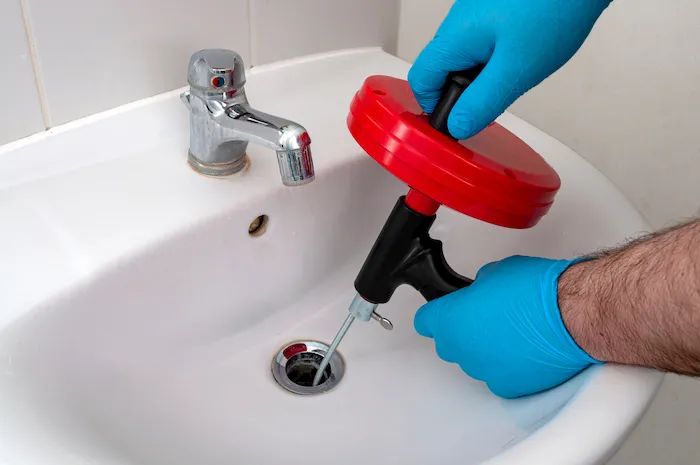
6. Use a Drain Snake
A drain snake — sometimes called a plumber’s snake or drain auger — can reach blockages that are deeper inside the pipe.
Insert the snake slowly into the drain.
Continue feeding it until you feel resistance.
Rotate or operate the snake according to its instructions to help break through or retrieve the obstruction.
Then slowly remove it.
You may pull out hair, grease or other unpleasant debris, so gloves are definitely recommended.
Afterward, flush the drain with water.
7. Know When to Call a Plumber
A blocked drain isn’t always a simple local clog.
Consider calling a licensed plumber if:
- Multiple drains are backing up at the same time
- Water comes back through another drain
- You repeatedly experience the same blockage
- You hear unusual gurgling from multiple fixtures
- There is a strong sewage smell
- Water is leaking from plumbing connections
- A drain snake doesn’t solve the problem
Multiple blocked fixtures can indicate a problem deeper in the plumbing or sewer system.
Trying increasingly aggressive DIY methods may make the situation worse.
How to Prevent Drains From Clogging Again
Prevention is much easier than clearing another blockage.
In the kitchen
Avoid pouring cooking oil or grease down the sink.
Instead, allow it to cool and dispose of it appropriately.
Use a sink strainer to catch food particles before they enter the drain.
In the bathroom
A hair catcher can dramatically reduce the amount of hair entering a shower or bathtub drain.
Clean it regularly rather than waiting for drainage to slow down.
Around the house
Pay attention when a drain starts becoming slower.
A slowly draining sink is often an early warning that material is accumulating inside the pipe.
Dealing with it early can be much easier than waiting until the drain becomes completely blocked.
Frequently Asked Questions
What is the easiest way to unclog a drain?
Start by removing visible debris and trying a plunger. These are simple methods and don’t require pouring harsh chemicals into the plumbing.
Why does my drain keep getting clogged?
Recurring clogs can be caused by accumulated hair, grease, soap residue or food waste. Repeated blockages can also indicate a deeper plumbing problem that needs professional inspection.
Can I use boiling water to unclog a drain?
Be cautious. Very hot water may help with some greasy residue, but boiling water isn’t appropriate for every plumbing system. If you have PVC pipes or aren’t sure what your plumbing can tolerate, avoid exposing it to extreme temperatures.
Why is my sink making a gurgling sound?
Occasional gurgling can be related to air moving through the plumbing, but persistent gurgling — particularly when combined with slow or backed-up drains — can indicate a drainage or venting problem.
What if multiple drains are clogged?
If several fixtures suddenly drain slowly or back up at the same time, the problem may be deeper in the drainage system rather than inside one sink or shower. That’s a good reason to contact a plumber.
Final Thoughts
You don’t necessarily need special equipment to fix a minor blocked drain.
Start simple:
- Remove visible debris.
- Try hot water where appropriate.
- Use a plunger.
- Clean the P-trap if you’re comfortable doing so.
- Try a drain snake for deeper blockages.
If the blockage keeps returning or affects several fixtures, stop treating it as a simple DIY problem and have the plumbing professionally inspected.
A few minutes of regular drain maintenance can also save you from dealing with a much bigger blockage later.